
Last updated November 25, 2026
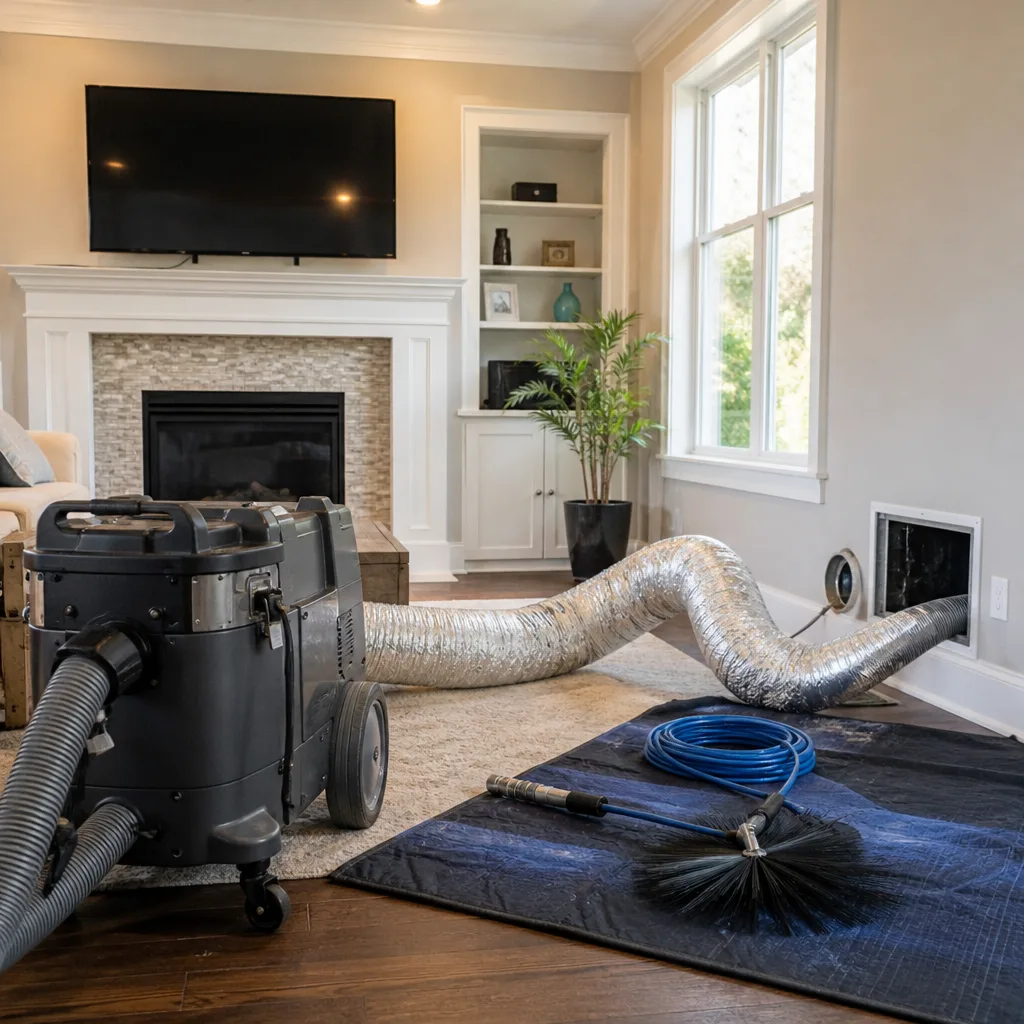 Whole-home duct cleaning
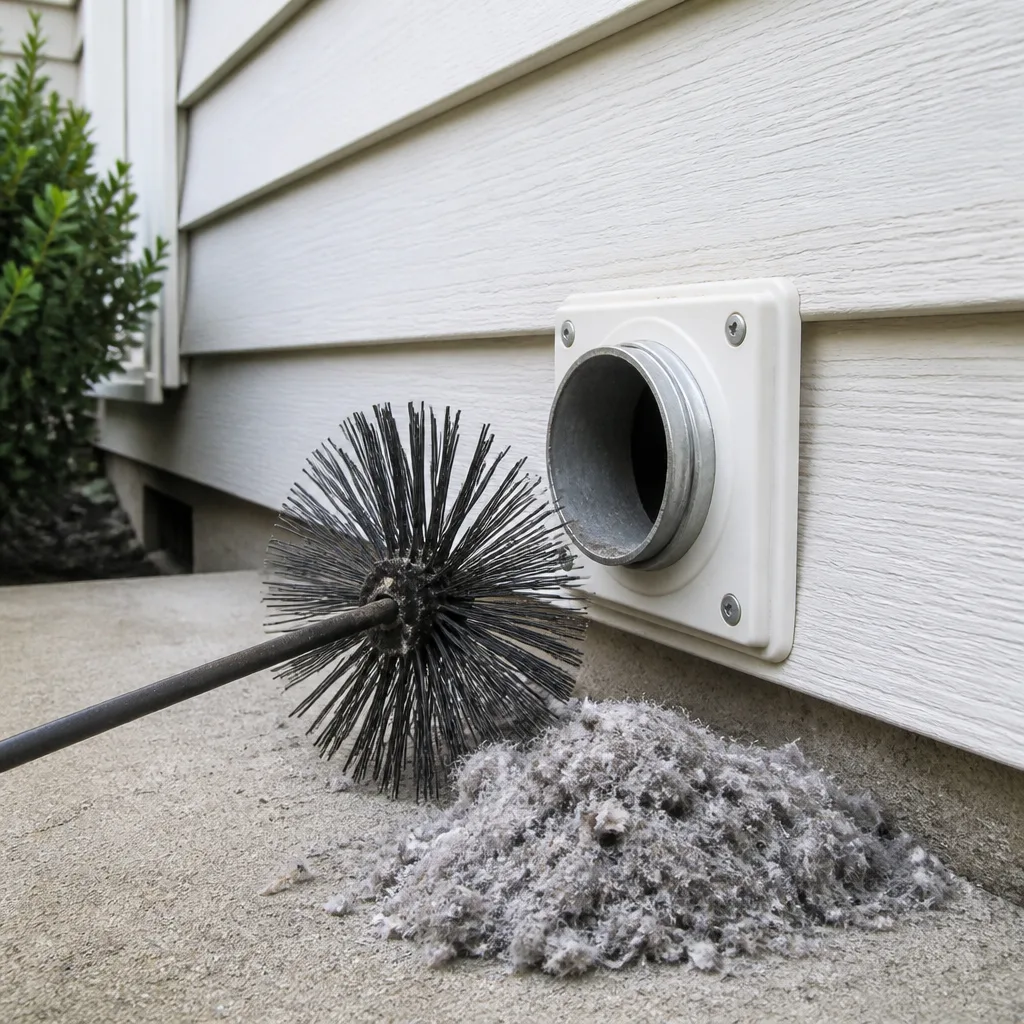 Dryer vent cleaning
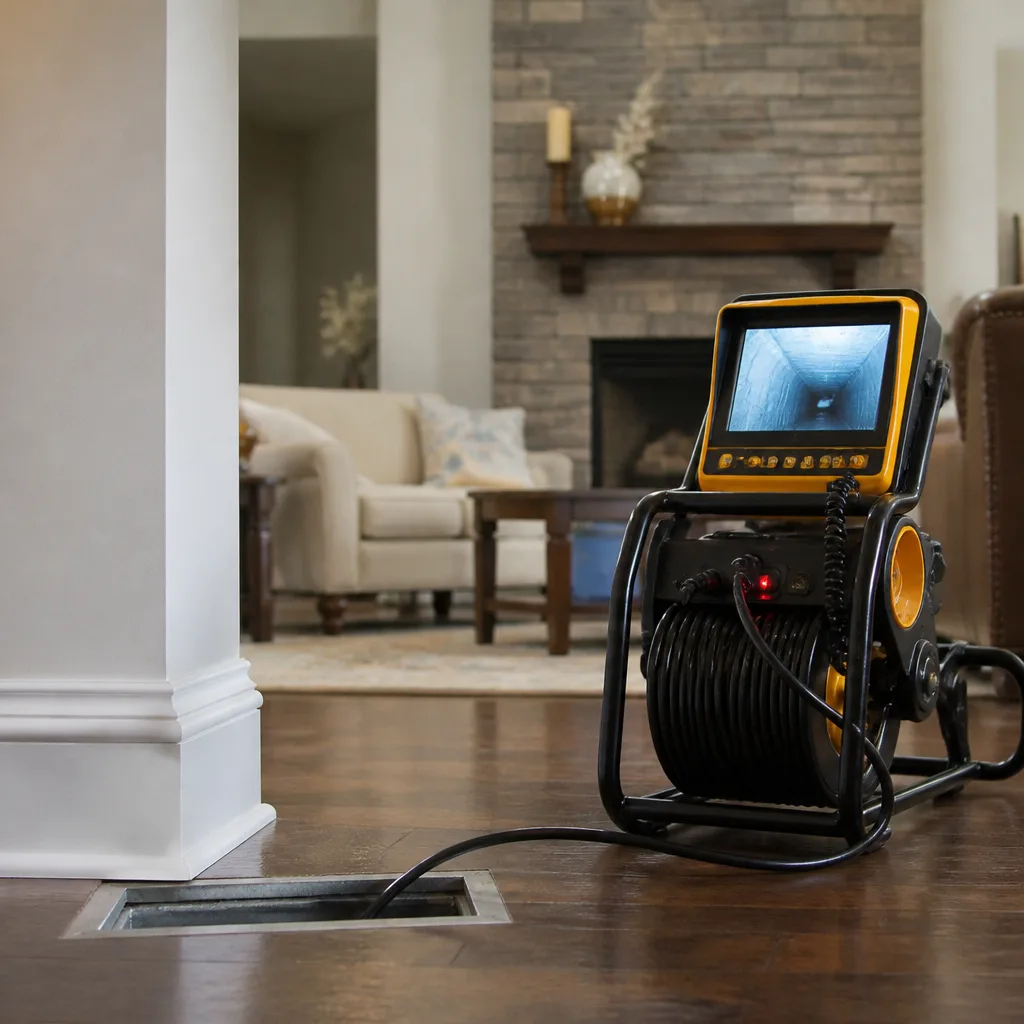 Camera inspection
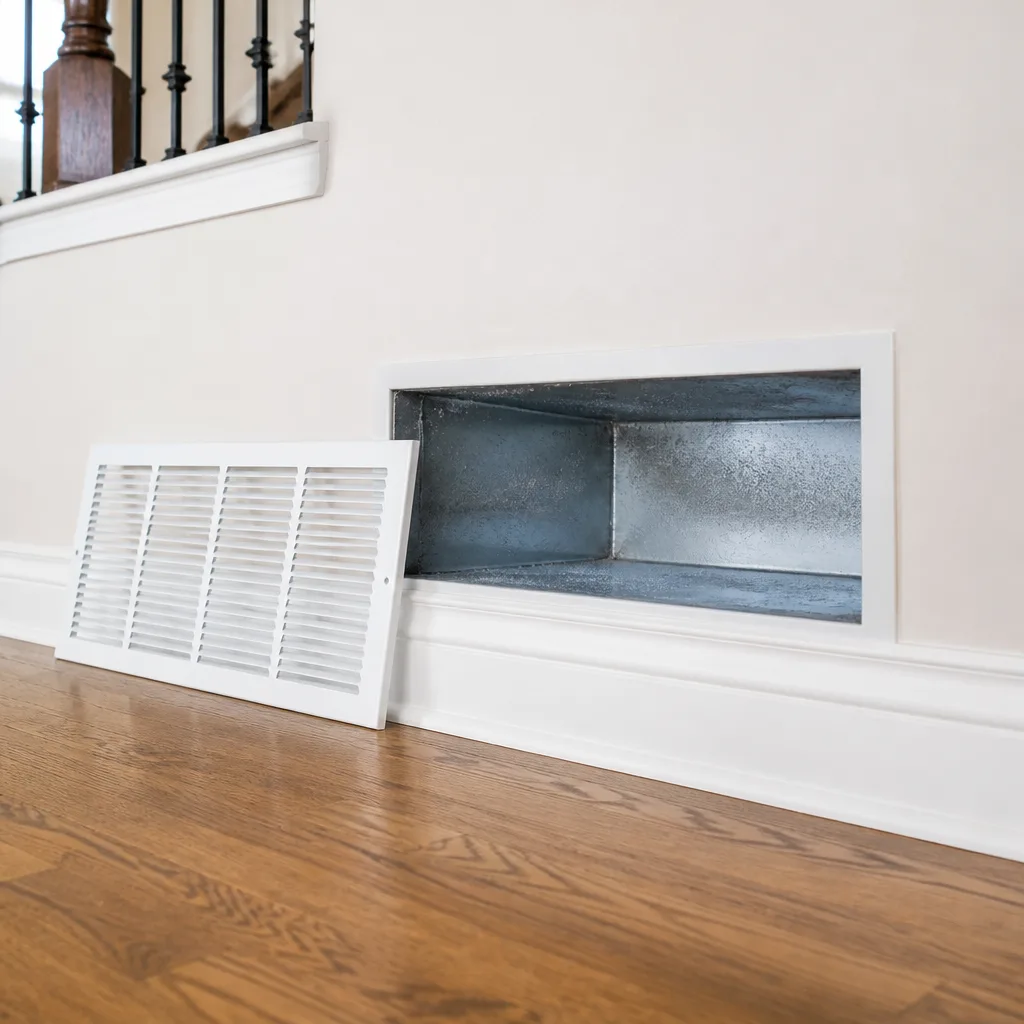 Sanitizing & deodorizing
Whole-system duct and dryer vent check with before-and-after photos - you see exactly what came out of your vents
That "$99 whole-house special" is a bait ad - the real number appears once they are in your hallway, or the "clean" is a shop-vac at the register. We photograph the inside of your ducts before and after instead.
DIY vs Professional Air Duct Cleaning: The Elmwood Village Homeowner’s Decision Guide
Most homeowners judge their ducts by the grille they can see, and that grille is the least important part of the system. A shop vac and a vent brush can reach the first stretch of a supply run and lift dust from the register face, which feels like progress. It isn’t the same job. The debris that changes your air quality and stresses your blower sits in the trunk lines, the return plenum, and the air handler compartment, and reaching it takes vacuum volume no rental unit produces. This guide explains what DIY genuinely handles, where it stops, and how to decide for an Elmwood Village home.
Quick Answer
DIY cleaning works for register faces and short branch runs, but it cannot extract debris from main trunk lines, return plenums, or the air handler because consumer equipment moves too little air. Professional air duct cleaning in Elmwood Village is the right call when you have visible buildup in the trunks, musty odors, recurring dust after filter changes, or original mid-century ductwork under the floors. If your only concern is dusty grilles, DIY maintenance between professional cleanings is a reasonable plan.
Styles & brands we work with
- Whole-home duct cleaning
- Dryer vent cleaning
- Camera inspection
- Sanitizing & deodorizing
Table of Contents
- The CFM Gap: Why Suction Volume Decides the Job
- What DIY Air Duct Cleaning Actually Accomplishes
- Where DIY Stops: Trunks, Plenums, and the Air Handler
- The Risk of Half a Job: Agitation Without Capture
- Elmwood Village Housing Stock: Why Old Ducts Change the Answer
- DIY Habits That Genuinely Extend Time Between Cleanings
- What a Professional Clean Actually Involves
- A Five-Step Framework for Deciding
The CFM Gap: Why Suction Volume Decides the Job
The DIY versus professional question looks like a skill question. It isn’t. It’s a physics question, and the number that settles it is cubic feet per minute, or CFM: how much air a machine can move through a duct in a minute. That figure determines whether debris lifts off the duct wall and travels out of your house, or simply gets disturbed and settles somewhere else in the system.
A consumer wet/dry shop vac moves around 100 to 150 CFM in this kind of work. That’s enough to clear a register boot, the short sheet-metal box behind the grille, and maybe the first reachable feet of a branch. Professional truck-mount systems generate 4,000 to 8,000 CFM, paired with rotary agitation that scrubs the duct wall while the vacuum pulls. A main trunk line can carry the majority of a system’s airborne debris, and moving that material through a long, flat run takes volume that no rental outlet stocks. Snap the two ends of that comparison together and the decision mostly makes itself. Cleaning is not about effort. It’s about whether the machine can create enough negative pressure at the far end of a trunk to drag particles toward it.
This is why a homeowner can spend a full day on their ducts and end up with registers that look clean and a system that still carries the same load in the trunk. Nothing was extracted. The surface dust came off, and that’s all.
What DIY Air Duct Cleaning Actually Accomplishes
We don’t talk homeowners out of DIY where it genuinely helps. Register face cleaning and short branch runs are manageable tasks with basic tools, and doing them well has real value between professional visits.
Here’s what a careful homeowner can reasonably handle:
- Register and grille faces. Removing and washing supply and return grilles clears surface dust that visible and easy to reach.
- Register boots. The short metal box behind each grille can be wiped once the grille is off, which cuts dust at the entry point.
- Short, reachable branch runs. A flex brush on a drill or a long-handled vent brush can loosen light dust in a branch run that’s only a few feet long and has no elbows.
- Filter discipline. Regular filter changes are the single highest-value DIY habit in the whole system, and they cost almost nothing.
- Visual inspection of accessible sections. Looking into registers with a flashlight and noting buildup, moisture, or debris tells you when the system needs more than a surface pass.
These habits matter, and they’re worth doing. But note what they all share: they touch only what a person can physically reach from a grille opening. The trunk lines, the return plenum, the main supply run under the floor, and the air handler compartment are all outside that reach, and those are where the bulk of the load sits in any system that’s been running for years.
Where DIY Stops: Trunks, Plenums, and the Air Handler
The parts of a duct system a homeowner can’t clean are, by volume, most of the system. Understanding why helps you decide when DIY is enough and when it isn’t.
Main trunk lines
Trunk lines are the large ducts that distribute air from the air handler to the branches feeding each room. They run under floors or through walls, are often flat and long, and have no cleanout a homeowner can open. In older homes they may have decades of settled debris layered along the bottom of the run. Clearing that takes rotary agitation through an access port a professional opens, plus enough vacuum to pull the material out the far end.
Return plenums
The return side pulls air back to the air handler, and the plenum is the big duct connecting the return grilles to the unit. It sits under more negative pressure than the supply side, which means debris there gets pulled into the blower and the coil. That’s the section homeowners worry about most, and it’s the hardest one to reach without disconnecting the system.
The air handler compartment
The blower wheel, the evaporator coil, and the interior of the air handler cabinet collect dust that the filter misses. Cleaning inside the unit without the right process risks damage to the coil fins and the blower. That’s work for a technician with the right tools, not a homeowner with a brush.
Air conditioning and electrical components sit inside that compartment, and mistimed work around them can hurt you. We flag this for a reason: the air handler isn’t a DIY zone. If you’re unsure what’s inside your unit, keep the panel closed and have a trained technician handle it.
The Risk of Half a Job: Agitation Without Capture
A partial DIY job can be worse than no job at all, and it’s worth understanding why. When you brush a branch run without enough vacuum behind it, you loosen compacted dust that was sitting quietly on the duct wall. That dust then travels wherever the air takes it.
Where it typically ends up:
- The filter. Loose particulate loads the filter faster than normal operation would, so a new filter clogs quicker than you expect.
- The blower housing. Whatever slips past the filter accumulates on the blower wheel, out of balance and out of sight.
- The evaporator coil. Debris coating the coil reduces heat transfer and puts more demand on your air conditioning during an Elmwood Village summer.
- Your living space. Fine dust that reaches registers enters rooms as visible dusting on surfaces.
None of this is dangerous on its own, but it’s a predictable pattern. Loosening debris without capturing it shifts the load deeper into the system instead of out of the house. That’s why the professional process pairs mechanical agitation with extraction in one operation: a rotary brush loosens the material, and a HEPA-filtered vacuum pulls it into a sealed container before it can go anywhere else. If you’re going to agitate, you need to capture. Consumer gear lets you do one without the other.
Elmwood Village Housing Stock: Why Old Ducts Change the Answer
Elmwood Village is not a neighborhood of new construction. A large share of its homes date from the 1930s through the 1950s, and their ductwork was built for a different era of heating. That matters for the DIY question in ways it wouldn’t in a newer suburb.
The typical setup in these homes:
- Flat trunk runs under the floors. Older systems often use long, flat sheet-metal trunks with limited clearance and few access points. Debris collects along the bottom and compacts over decades.
- Layered debris in the main runs. A house that’s been occupied and heated for sixty or seventy years accumulates material in the trunks that no brush from a register opening will reach.
- Original duct joints. Older ductwork has seams and joints that lose their seal over time, which lets attic or basement air and dust into the supply stream.
- Retrofits and additions. Many Elmwood Village homes have had furnaces replaced and ductwork partially modified, which can leave mismatched runs and dead legs where air stagnates.
In a home like this, the DIY-versus-professional question tilts hard toward professional cleaning because the bulk of the load isn’t in the branch runs a homeowner can reach. It’s in the trunk, and getting it out takes equipment that pulls 4,000 CFM or more through a contained environment. That’s the reason older homes in Elmwood Village benefit most from a full professional clean.
Our technicians have up to 10 years of experience working with systems across neighborhoods like this, and they know what old ductwork can and can’t survive. If you’re unsure what’s under your floor, the right first step is a professional inspection, and air duct cleaning Elmwood Village is the place to start the conversation.
DIY Habits That Genuinely Extend Time Between Cleanings
DIY doesn’t have to compete with a professional clean. Done right, it extends the interval between them. The habits below are the ones we’d recommend to a neighbor even if they never call us.
- Change the filter on a firm schedule. A 1-inch filter in an Elmwood Village house running year-round heating and cooling should be swapped roughly every 2 to 3 months. A homeowner who does this consistently sees less dust in the house and less load on the system.
- Wipe and wash register grilles. Pull them off, wash them in the sink, and let them dry before reinstalling. Do this a couple of times a year, more often if you have pets.
- Vacuum register boots with a brush attachment. Reach in as far as your arm goes and lift the loose dust. Don’t force a brush past an elbow; you’ll just push debris deeper.
- Inspect accessible sections once a year. With a flashlight, look into returns and a few supply registers. If you see buildup past the boot, or if the interior looks wet or smells musty, that’s the signal to schedule a professional look.
- Keep returns unobstructed. Furniture pushed against return grilles chokes airflow and makes the system work harder. A few inches of clearance is all it needs.
These habits buy you time, but they don’t replace a full clean. There’s a point where the trunks need extraction, and no amount of filter discipline substitutes for that.
What a Professional Clean Actually Involves
Understanding the professional process is the best way to tell a real clean from a superficial one, and it’s the reason we name the equipment. Anyone can claim to clean ducts. Specific tools and a clear sequence make the claim verifiable.
The process we use looks like this:
- Inspection. We open accessible sections and look at the trunk lines, plenums, and air handler compartment before anything is cleaned. That tells us what we’re dealing with and any repair work the ducts need.
- Negative-pressure containment. Abatement Technologies negative-air machines seal off the work zone and hold the system under negative pressure, so dislodged debris travels out instead of back into your home.
- Mechanical agitation. A Rotobrush rotary brush system scrubs the inside of the duct while a Nikro HEPA-filtered vacuum extracts the loosened material. The two run together, which is the difference between capturing debris and just moving it around.
- Repair and sealing. Loose joints and open seams get sealed, since a duct that leaks lets dust and unconditioned air straight into the supply stream. That’s the reason duct repair and sealing is one of the five services we offer.
- Sanitizing where needed. After mechanical cleaning, Guardsman-grade sanitizing treatments address mold spores, bacteria, and odors that debris removal alone won’t reach.
- Before-and-after confirmation. Photos of the ducts as we found them and after cleaning, so you can see what changed.
Five service lines in one relationship is the practical payoff. When we handle air duct cleaning, repair and sealing, and air quality work under one visit, nothing falls through the cracks between contractors. For post-cleaning improvement, we install and apply Honeywell and Aprilaire air quality solutions, which bridge the gap between a clean system and better air going forward. Dryer vent cleaning is a separate, dedicated service and a genuine fire-prevention measure, not a line item added onto a duct bill. If your vent is overdue, dryer vent cleaning is worth scheduling. The same goes for the HVAC side, where HVAC cleaning keeps the blower and coil from becoming the hidden load in the system.
A Five-Step Framework for Deciding
If you want a straightforward way to decide, use these five questions in order. If you answer “yes” to any of the first three, professional cleaning is the right call.
- Is there visible buildup past the register boot? Shine a flashlight into a supply and a return. If you see a compacted layer of dust along the duct floor beyond the first few inches, DIY won’t reach it.
- Do you smell something musty when the system runs? That’s a sign of buildup in the plenum or air handler, and cleaning without sanitizing tends to leave the smell behind.
- Do you have recurring dust in the house despite regular filter changes? Dust that returns within days is a sign of a load somewhere you can’t see.
- Has the system been cleaned since the house was built? In a 1930s to 1950s Elmwood Village home, decades of debris in trunk lines are a reasonable assumption unless there’s record of a full clean.
- Have you ever wanted to know what the ducts actually look like inside? Before-and-after photos are the answer to that question, and only a professional clean will produce them.
If all five questions point to DIY, stick with register cleaning and filter discipline, and plan a professional look once a year. If any of them don’t, schedule a professional estimate.
Common Mistakes to Avoid
Some of these show up in the trade every year, and knowing them saves you money regardless of which side of the decision you land on.
- Assuming a shop vac can clean a trunk line. It can’t. The CFM gap is far too large, and a homeowner who tries will agitate debris without capturing it. The result is a dirtier system than before.
- Judging the system by the grille. A clean register face says nothing about the trunk line behind it. Look deeper before you decide the ducts are clean.
- Hiring on the coupon price alone. A very low advertised price often becomes a much larger invoice once the technician is on site. Ask for a flat price per system, in writing, before work begins.
- Skipping the containment step. Cleaning without Abatement Technologies negative-pressure containment or an equivalent process means dislodged debris can recirculate into living spaces. If a quote skips this, ask why.
- Ignoring older duct runs in Elmwood Village homes. Mid-century flat-run trunks have section joints that lose their seal. Cleaning without repair and sealing leaves the source of the problem in place.
- Neglecting the dryer vent. A clogged dryer vent is a documented fire risk, and it’s the one part of the system most often forgotten. It deserves its own service schedule.
- Cleaning without confirming the work. If you can’t see before-and-after photos of your own ducts, you have no way to know what was actually done.
See the difference
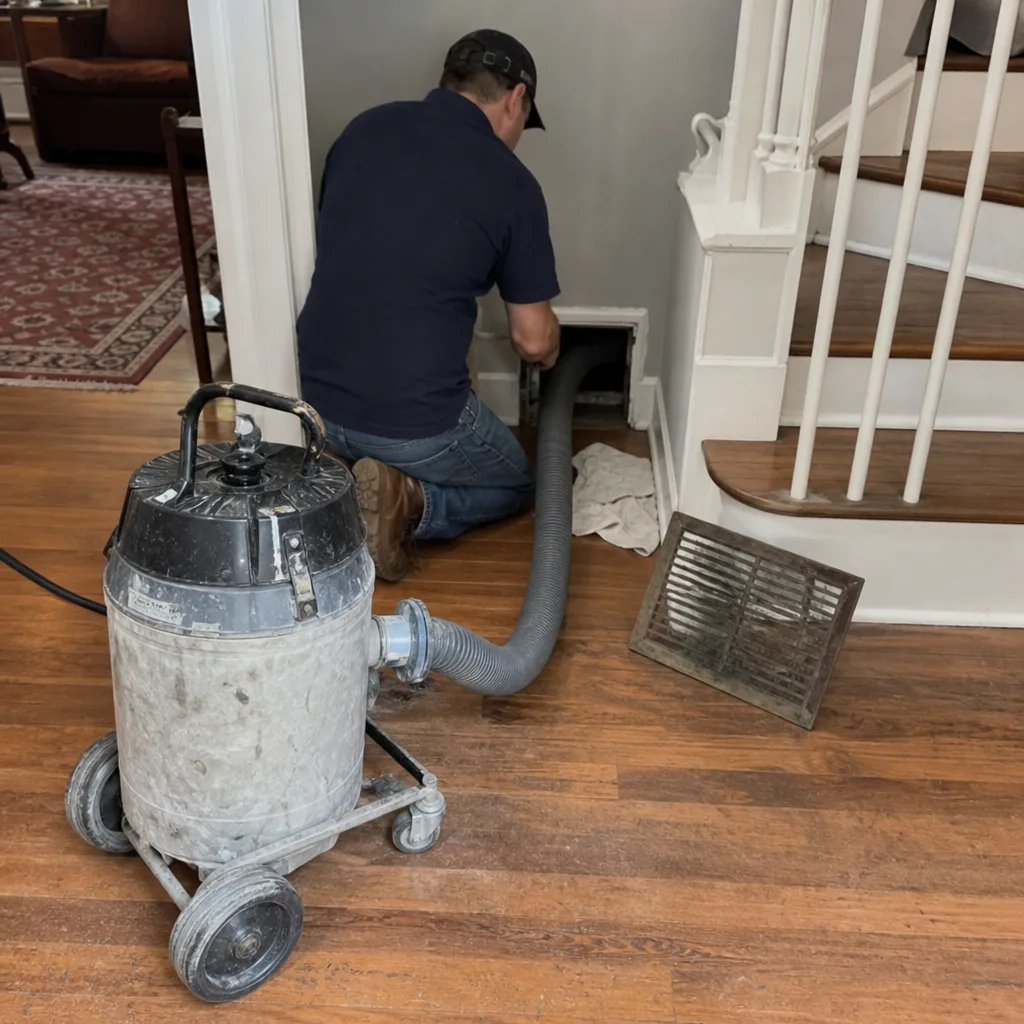 Before
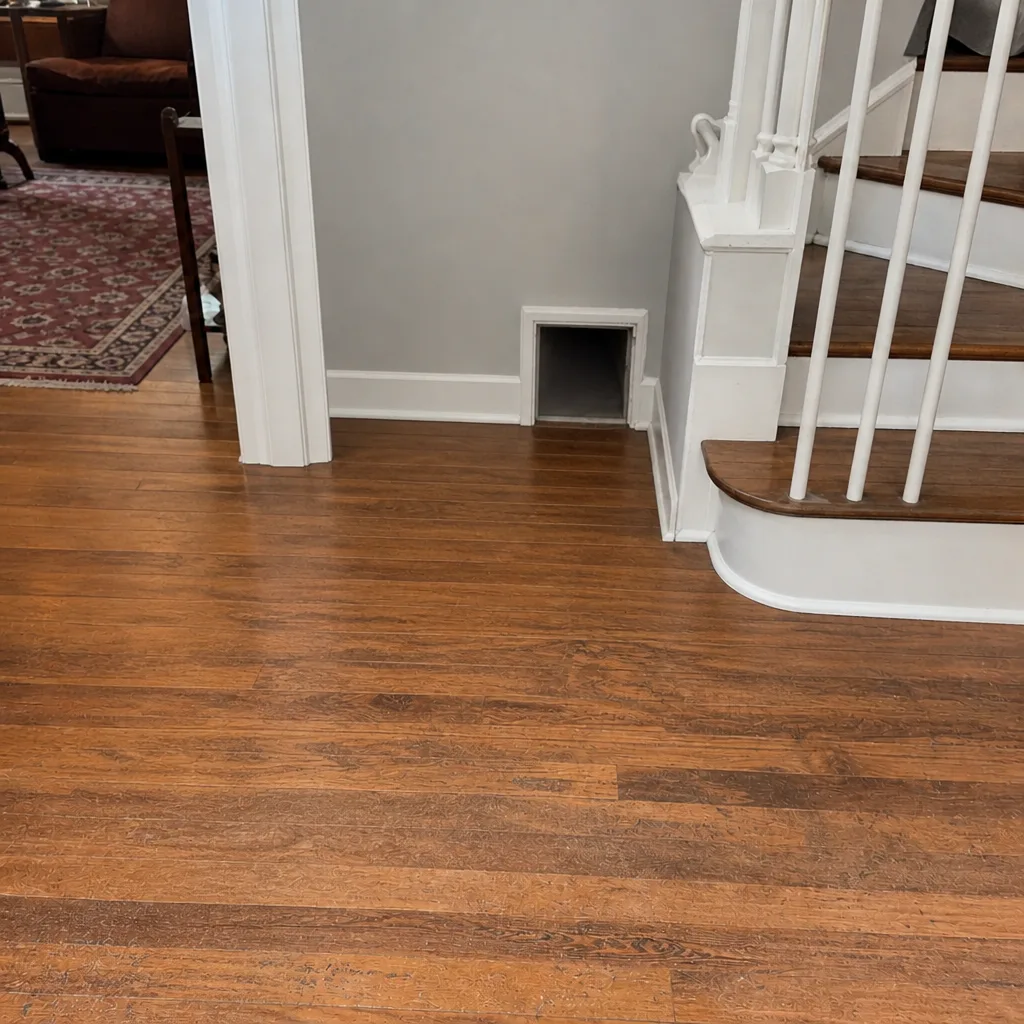 After
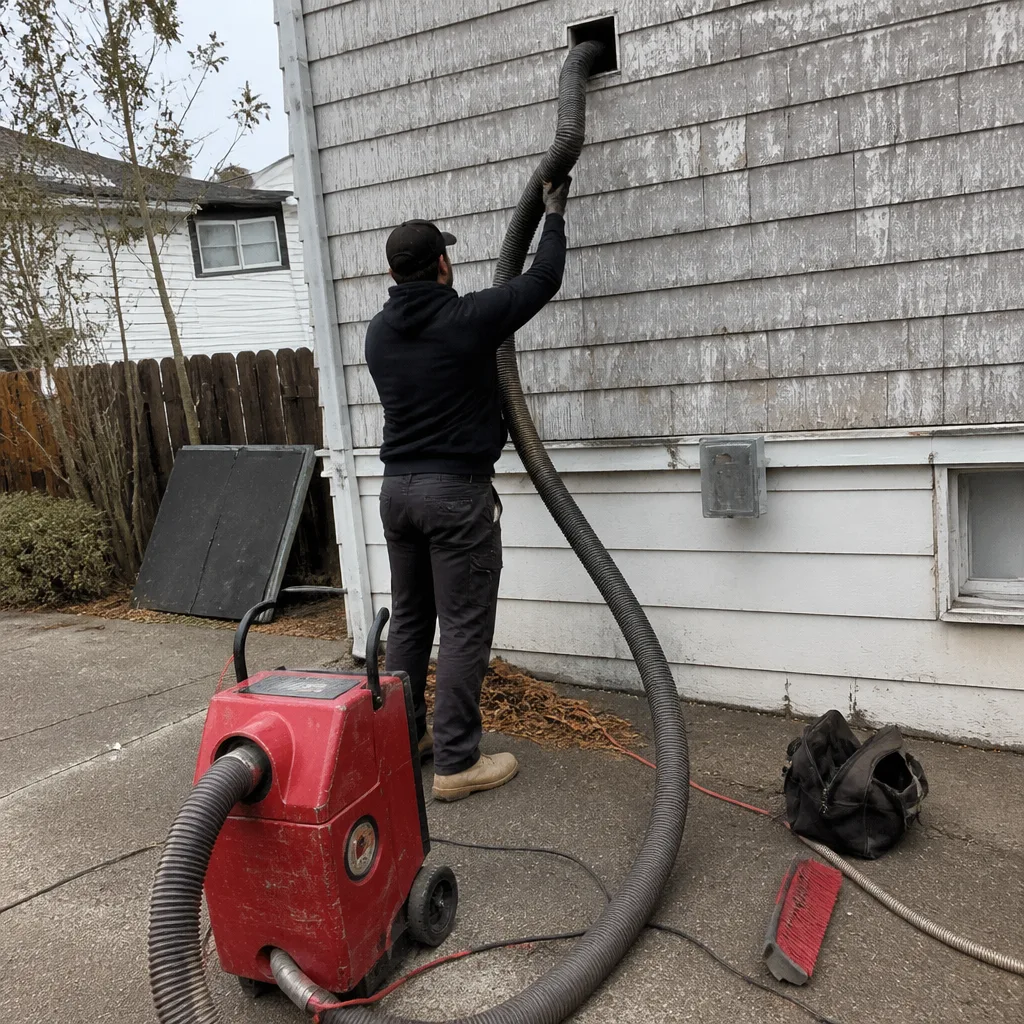 Before
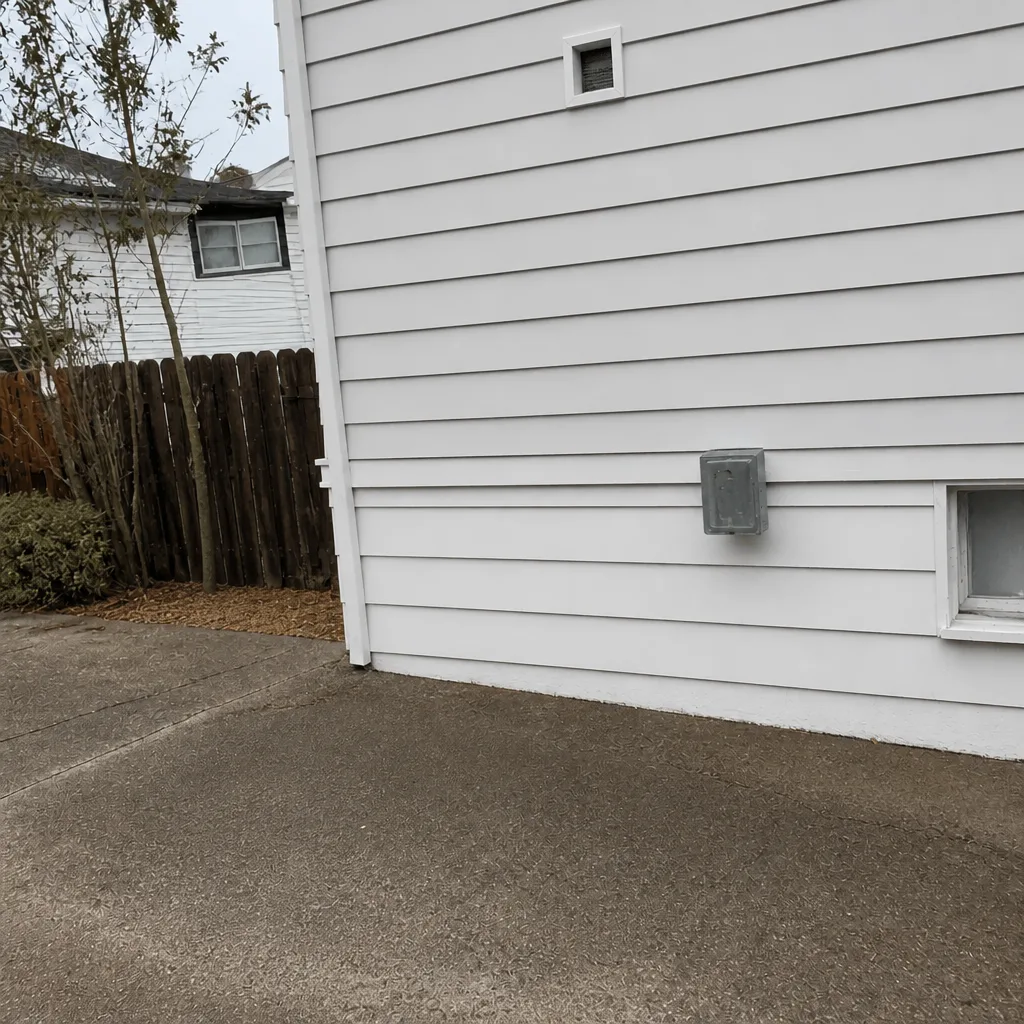 After
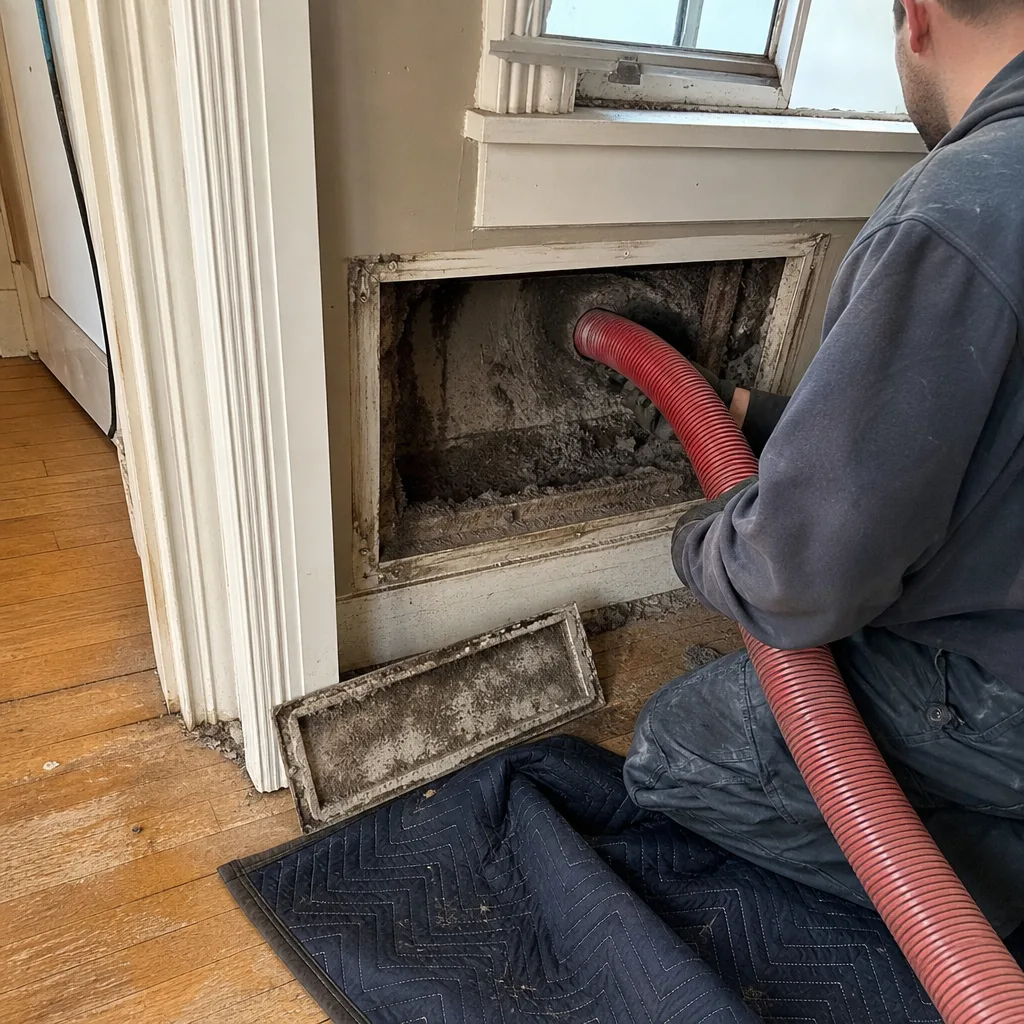 Before
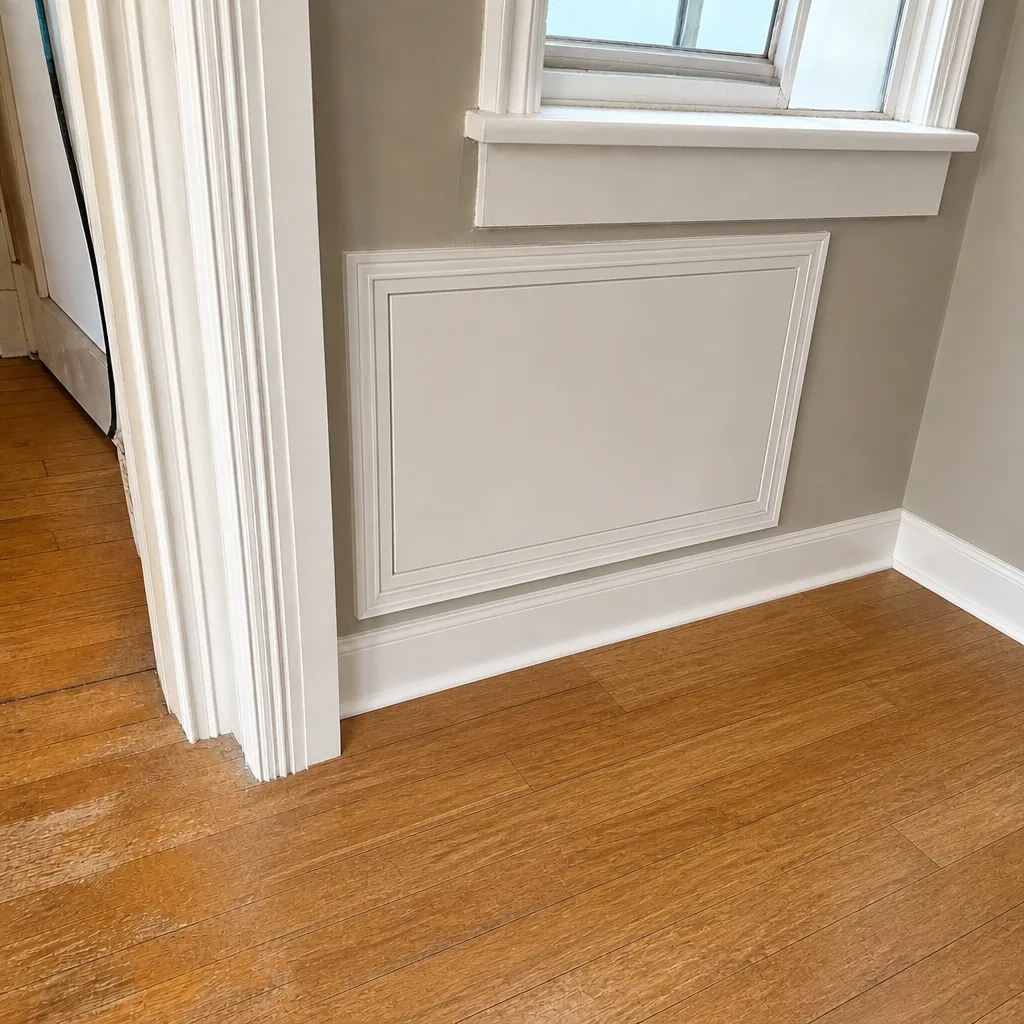 After
When to Call a Professional
Call a professional when your ducts show signs that the problem is past the branch run. That includes visible buildup in the trunk lines, musty odors when the system starts, dust that returns despite regular filter changes, and any home where the ductwork has never had a full clean. It also applies after a renovation, after a pest problem, and after water has reached any part of the system. If your air handler compartment is the concern, keep the panel closed: the electrical components inside are not a DIY zone, and they need a trained technician.
Air Duct Cleaning Elmwood Village offers free estimates in Elmwood Village, with one flat price per system agreed before work starts. We use Rotobrush, Nikro, and Abatement Technologies equipment on every job, and we photograph the ducts before and after so you can confirm the work was done. We answer 24/7 and offer fast dispatch from 7am to 7pm, Sunday through Friday, closed Saturday. Call (855) 726-7901 for an exact quote.
Frequently Asked Questions
You can clean the register faces and the first reachable stretch of each branch run, but a shop vac at 100 to 150 CFM cannot clean main trunk lines, return plenums, or the air handler. The volume is simply too low to lift compacted debris off the duct wall and carry it out. DIY is a maintenance aid, not a substitute for a full clean.
Most homes in this area fall in a typical range of a few hundred dollars for a straightforward system, with larger or older homes running higher, and the written estimate sets the final price. What you should insist on is one flat price per system agreed before work starts, not a teaser price that grows once the technician is on site. Call (855) 726-7901 for an exact quote; estimates are free.
A very low quote usually means the work is far less thorough than a full clean, often a surface pass at the registers without trunk-line extraction or containment. Ask how they reach the plenum, whether they use negative-pressure containment, and what you get for the price in writing. A fair quote reflects a full process and is priced per system, not per vent. Call (855) 726-7901 if you want those answers on the record before you book.
You should see before-and-after photos of your own ducts, not stock images. You should also know what equipment was used and how the system was contained during the job. We photograph the ducts as we find them and after cleaning, so the evidence is yours to keep. Call (855) 726-7901 and we’ll walk you through what you’ll see.
The general guideline is every 3 to 5 years for most homes, and more often in older Elmwood Village homes where the trunk runs hold decades of debris. Homes with pets, allergies, a recent renovation, or a dirty return plenum often need it sooner. The right interval is set by what an inspection shows, not a calendar. Call (855) 726-7901 and we’ll help you decide on timing.
No. The air handler contains electrical components and the evaporator coil, and the coil fins are easily bent. Work inside it should be done by a trained technician with the right tools and containment. Keep the panel closed and have it inspected professionally. Call (855) 726-7901 to schedule.
The Bottom Line
The real question in DIY versus professional air duct cleaning isn’t skill. It’s whether the machine can create enough suction volume to remove debris from trunk lines, not just disturb it. Consumer equipment handles register faces and short branch runs well, and those habits are worth keeping. The main trunks, return plenum, and air handler compartment in any Elmwood Village home, and especially in the older homes here, need a jetted, contained clean with proper agitation and extraction. If you’re going to agitate, capture. When you can’t, call a professional. We use Rotobrush, Nikro, and Abatement Technologies equipment, price each job as one flat price per system agreed in writing, and show before-and-after photos of your own ducts. Call (855) 726-7901 for a free estimate. We answer 24/7, with fast dispatch from 7am to 7pm, Sunday through Friday, closed Saturday.
Written by the team at Air Duct Cleaning Elmwood Village.