
Last updated November 25, 2026
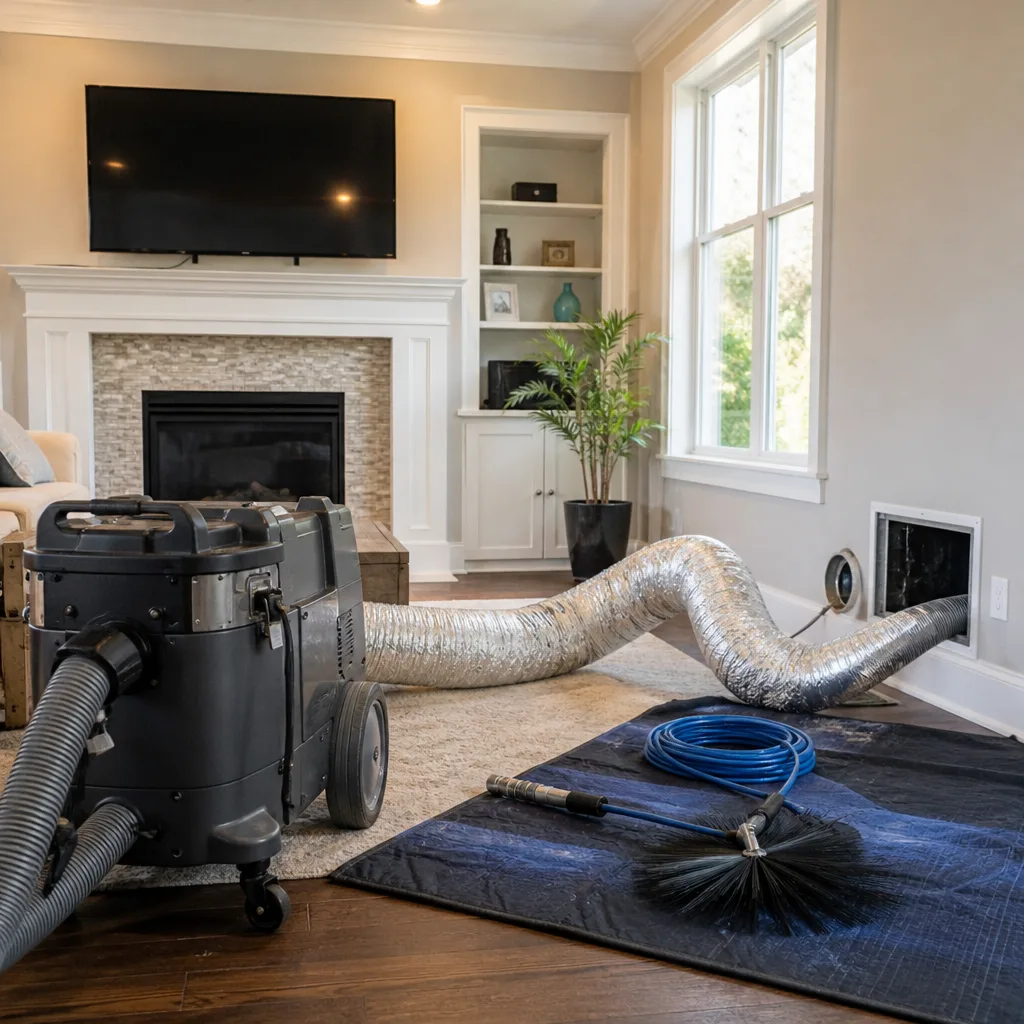 Whole-home duct cleaning
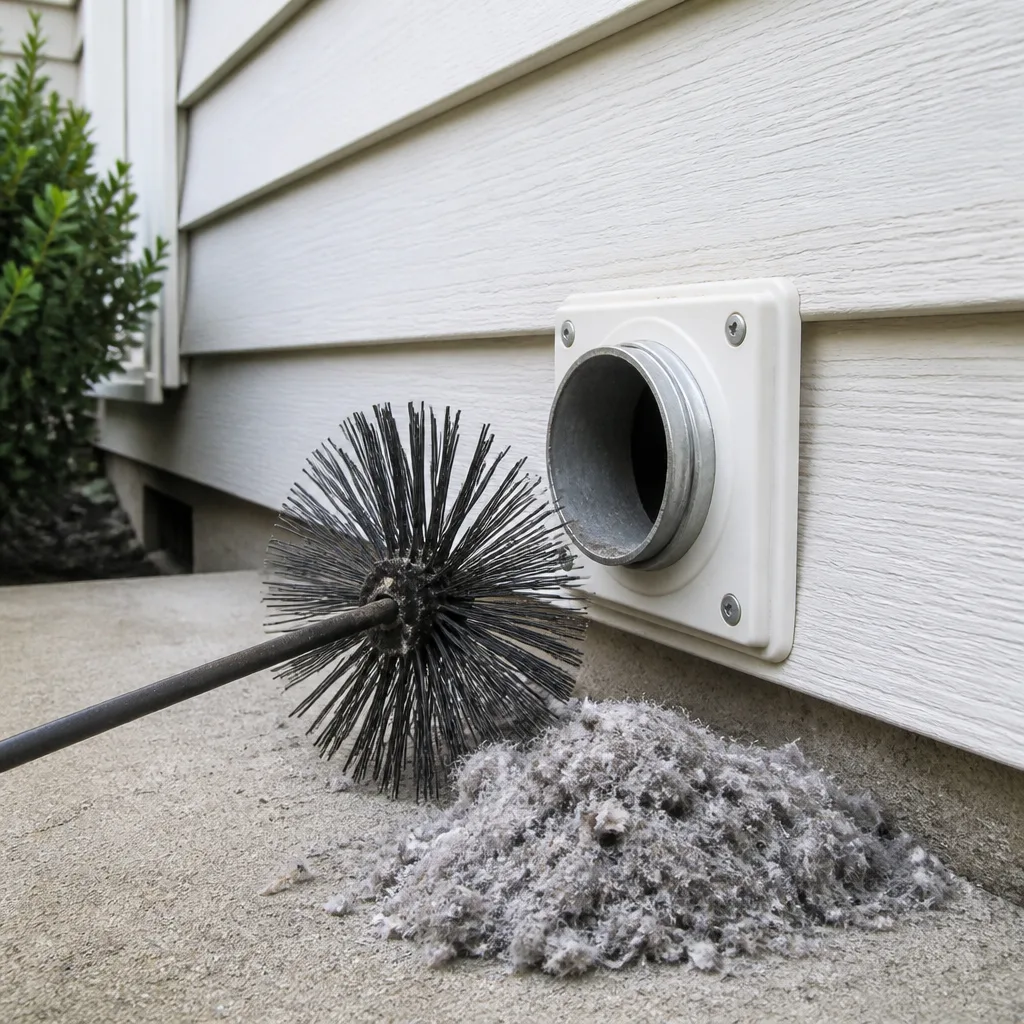 Dryer vent cleaning
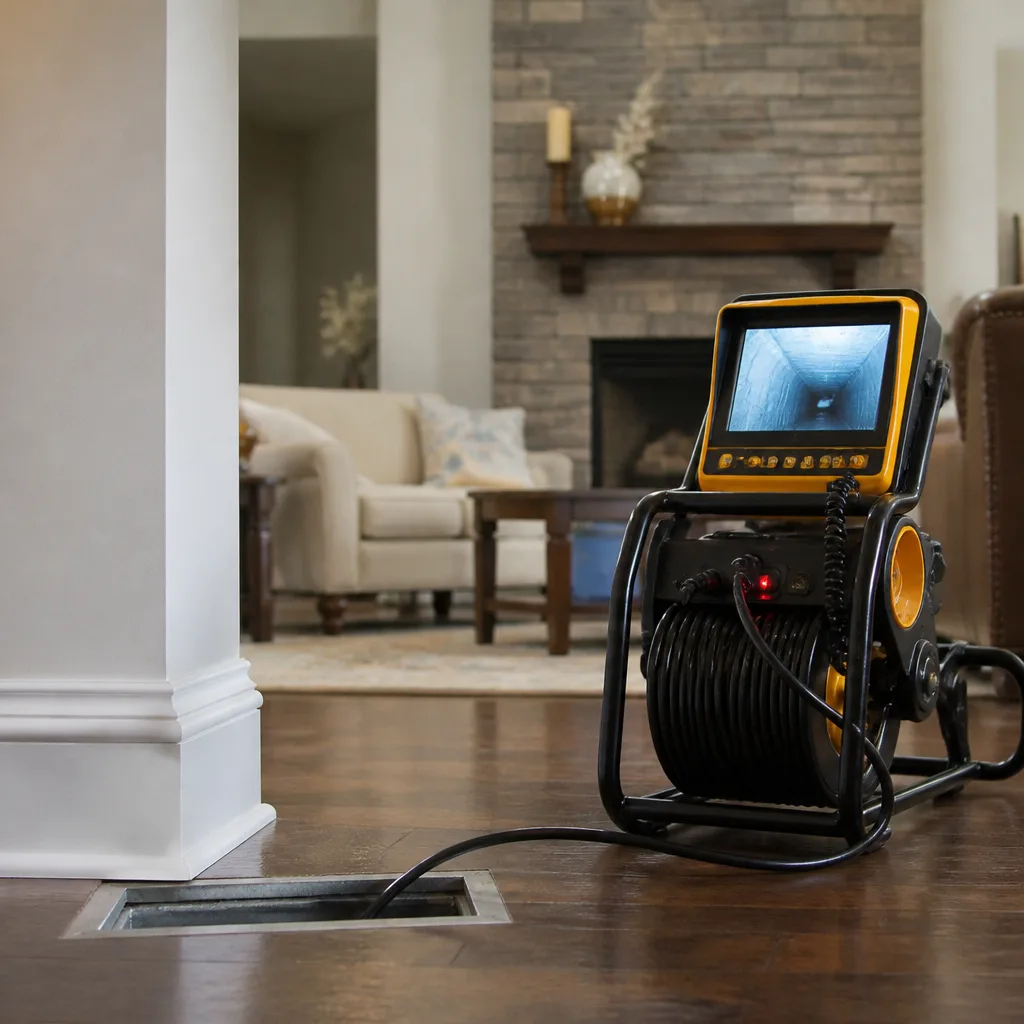 Camera inspection
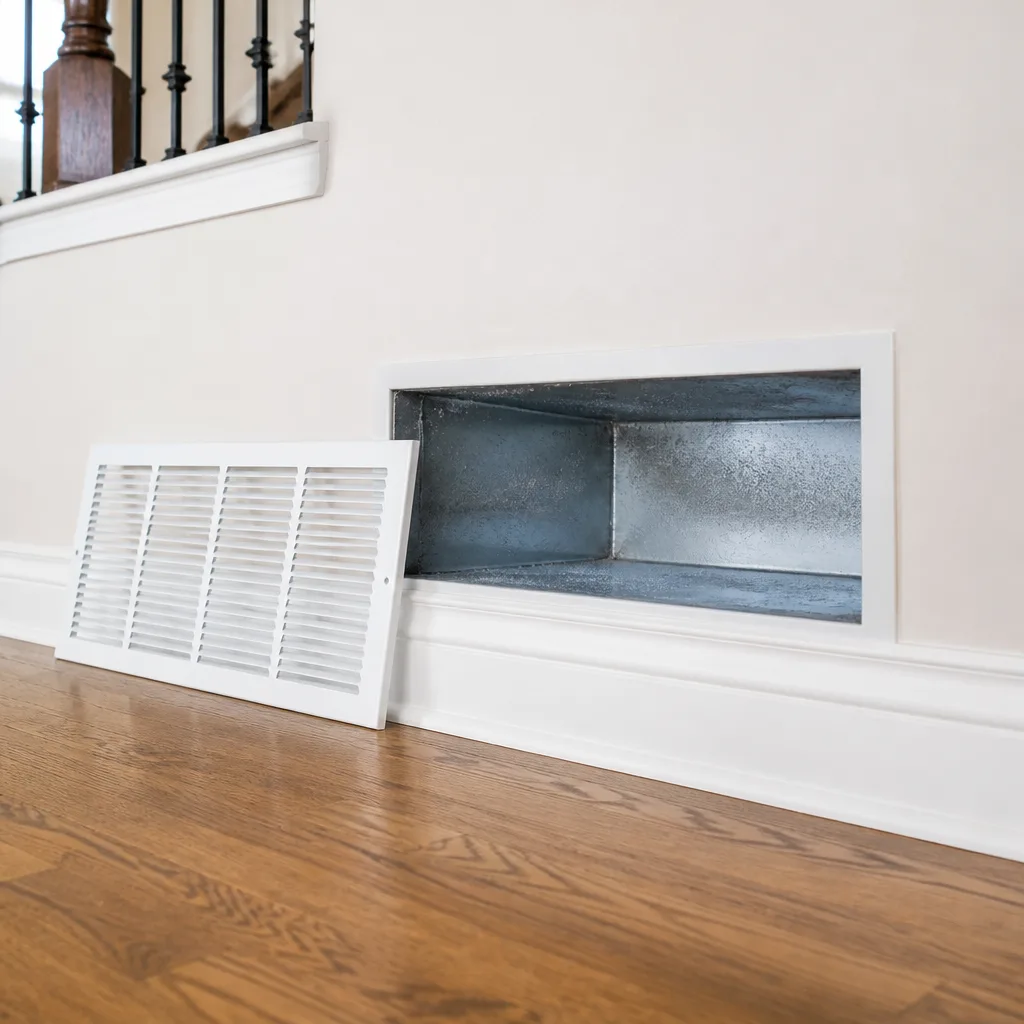 Sanitizing & deodorizing
Whole-system duct and dryer vent check with before-and-after photos - you see exactly what came out of your vents
That "$99 whole-house special" is a bait ad - the real number appears once they are in your hallway, or the "clean" is a shop-vac at the register. We photograph the inside of your ducts before and after instead.
Choosing the Right Air Duct Cleaning Brand: A Buyer’s Guide for Elmwood Village
Three Elmwood Village homeowners can hire three different companies all calling themselves “air duct specialists,” receive three completely different scopes of work, and have no reliable way to compare outcomes. That’s the problem this guide solves. The words on the side of the van tell you almost nothing about the equipment inside it or the number of steps the crew plans to run in your basement. What separates a full indoor air quality contractor from a van-and-vac operator is hidden behind identical marketing language. Below you’ll find the specific questions to ask, the equipment to verify, the credentials to check, and how to read reviews for this service category without being fooled by a friendly five-star rating that describes nothing.
Quick Answer
To choose an air duct cleaning company in Elmwood Village, verify equipment and scope before you compare price. Ask what vacuum system they use, whether they perform mechanical agitation with a rotary brush, and whether they can inspect, clean, seal, repair, and sanitize under one call. A company that uses professional-grade equipment like Rotobrush and Nikro systems and runs negative-pressure containment with Abatement Technologies will answer those questions in plain detail. A company that can’t name its equipment or its process is the one to skip.
Styles & brands we work with
- Whole-home duct cleaning
- Dryer vent cleaning
- Camera inspection
- Sanitizing & deodorizing
Table of Contents
- Why Equipment Verification Comes First
- The Five Questions to Ask Every Company
- Scope: Single-Service Blowers vs. Full-System Contractors
- Credential Verification: NADCA, New York Licensing, and When Each Matters
- How to Read Reviews for Air Duct Cleaning
- Why Buffalo-Area Commercial Experience Fits Elmwood Village Housing
- What a Professional Job Actually Looks Like, Step by Step
- How Pricing Works and Why Cheap Quotes Bite Back
Why Equipment Verification Comes First
In our experience, the single best predictor of what a duct cleaning job will actually accomplish is the equipment parked outside the house. Rotobrush and Nikro systems exist for a reason: they agitate duct walls mechanically while extracting the loosened debris under continuous vacuum. A shop-vac and a flexible hose cannot do that. Neither can a generic rental machine. The rotary brush matters because duct interiors collect fine dust that clings. Suction alone passes over it. The brush contacts the surface, breaks the bond, and the vacuum carries it away.
Ask these questions directly, and listen to whether the answers are specific:
- What vacuum system do you use? A serious answer names the equipment and describes filtration. Nikro HEPA-filtered vacuums are built to prevent cross-contamination during extraction.
- Do you use a rotary brush or agitation tool? Mechanical agitation is what separates a real clean from a pass-through.
- How do you contain the debris you loosen? Abatement Technologies negative-air machines create a sealed, controlled environment so dislodged dust doesn’t drift back into the living room.
- Do you inspect before and after? Ask whether camera inspection is part of the process and whether you’ll see the results.
- Can you show me before-and-after photographs? Photos of the actual duct interior are the closest thing to proof of work.
If the answers are vague, the equipment is probably vague too. For a deeper walkthrough of the process itself, read our page on air duct cleaning, which explains the sequence from inspection to final vacuum pass.
The Five Questions to Ask Every Company
These five questions, asked over the phone before you book anything, will filter most of the field. Write the answers down and compare across companies.
- What equipment do you bring into the house? Look for specific brand names: Rotobrush for rotary agitation, Nikro for HEPA vacuum extraction, Abatement Technologies for negative-pressure containment. A company that says “professional equipment” without naming anything hasn’t answered the question.
- What exactly is included in the quoted scope? Ask whether the price covers supply and return sides, registers, and the air handler. Ask whether they clean the blower and coils or leave them. Scope creep hides in the word “ducts.”
- Can you handle repair, sealing, and sanitizing, or just cleaning? A company that only blows air through ducts will hand you a second contractor’s phone number the moment a seam is failing. One call, full system is a real advantage when the work needs to happen once.
- Who is doing the work, and are they on your payroll or subcontracted? End-to-end capability means inspection, cleaning, repair, sealing, and sanitizing performed under one service call, not handed to a third party who never saw your ductwork.
- What does the written estimate include, and what is the final price based on? A flat price per system, agreed before work starts, is what you want to hear. Anything else invites the bait-and-switch reputation this industry has earned.
If that sounds like a lot, it should. Elmwood Village homes deserve more than a phone quote in fifteen seconds. The homeowners who ask these questions rarely get surprised later.
Scope: Single-Service Blowers vs. Full-System Contractors
There’s a wide gap between a company that cleans ducts and a company that takes responsibility for the whole air handling system. A single-service duct blower shows up, runs suction through the trunk line, and leaves. When a seam is failing, a coil is loaded with dust, or the dryer vent is a lint trap nobody has touched, you’re back on the phone with a different contractor who has never seen your house.
A full-scope indoor air quality contractor covers five service lines in one relationship:
- Air duct cleaning – supply and return trunks, branches, and registers.
- Dryer vent cleaning – a dedicated service and a documented fire-prevention measure, not an add-on pitched at the last minute.
- HVAC cleaning – the air handler, blower, and coils where dust accumulates and efficiency erodes.
- Duct repair and sealing – finding and closing the leaks that send conditioned air into the attic or basement.
- Air quality and sanitizing – Guardsman-grade treatments that address mold spores, bacteria, and odors left behind after mechanical debris removal, plus Aprilaire and Honeywell solutions for the long run.
That last point matters more than it sounds. Mechanical cleaning removes debris; it does not always address biological contaminants that have colonized damp duct surfaces. A company with the equipment and product lines to handle both is doing two different jobs in one visit. When you plan HVAC cleaning as part of the same visit, you avoid paying twice for access to the same system.
If you’ve never looked inside your dryer vent cleaning run, that’s a separate scope worth checking too. The point of a full-scope contractor is that none of these questions requires a new phone number.
Credential Verification: NADCA, New York Licensing, and When Each Matters
Credentials are useful when you know what they cover and what they don’t. Two names show up in most duct cleaning marketing: NADCA certification and a New York mechanical contractor license. They are not interchangeable, and the work you’re buying may only require one of them.
NADCA is the National Air Duct Cleaners Association. Its certification speaks to the industry standard for duct cleaning practice and inspection. A NADCA-certified technician is trained in the assessment and source-removal approach that a real clean depends on. When the work is duct cleaning itself, this certification matters most.
A New York mechanical contractor license covers HVAC and mechanical system work at the level the state and municipality require for installation, alteration, and repair. When the job moves past cleaning into sealing, repairing, or altering the system, that’s the credential to ask about. For repair and sealing, ask whether the crew is licensed and insured as New York requires for the work being done.
What to verify, in order:
- Ask what certification the person doing the work holds, and whether it’s current.
- Ask whether the company can perform repair and sealing under its own license, or whether it hands that scope to someone else.
- Ask for a certificate of insurance before the work begins if you have any question.
- If you’re in a multi-unit building, check whether the work needs building access approval or a permit; ask the city’s building department when in doubt.
None of this is a substitute for the equipment questions. A credentialed company with the wrong equipment still leaves your ducts half dirty. Credentials plus equipment is the pairing that holds up.
How to Read Reviews for Air Duct Cleaning
Reviews for this service category are tricky because most homeowners can’t see inside their own ducts. A five-star review that says “friendly crew, on time, reasonable price” tells you nothing about whether the ducts were cleaned. Look for the details only a homeowner who actually watched the process would mention.
Signals of a thorough job in positive reviews:
- Mentions of before-and-after photos, or of the crew showing the homeowner what came out.
- Specific equipment references – a customer who remembers the brand of the vacuum saw something meaningful.
- Descriptions of the containment setup, drop cloths, or the negative-air machine.
- Notes about additional findings, like a dryer vent that needed attention or a seam that was sealed.
- Comments on the scope being explained before the work began, not after the invoice.
Signals of a job that probably didn’t happen:
- Reviews that praise only friendliness, punctuality, and price.
- Complaints about the price changing once the technician was on site.
- Complaints about debris on floors, furniture, or walls after the crew left.
- Reviews that mention a per-vent price quoted over the phone and a very different total at the end.
Read the three-star reviews carefully. That’s usually where the real story is. And if a company can point to its own before-and-after gallery, ask to see it before you commit.
Why Buffalo-Area Commercial Experience Fits Elmwood Village Housing
Elmwood Village is not a subdivision of new construction. The housing stock here is old, and the ductwork reflects it. Plenty of homes on these streets were built with forced-air systems added decades after the fact, or with metal trunks and short branch runs that have been modified more than once. That kind of ductwork takes a technician who has seen it before.
A Buffalo-area contractor with commercial duct experience understands several things that a national franchise operator optimized for new construction does not:
- Asbestos and older materials. Homes of a certain age can carry ducts wrapped or sealed with materials that need careful handling. A commercial-experienced crew knows to inspect before disturbing.
- Short, awkward runs. Elmwood Village basements and crawl spaces don’t always accommodate standard equipment. Rotary brushes and flexible hose have to be worked into tight spaces without damage.
- Mixed-system retrofits. When a furnace was replaced but the ducts weren’t, the system is a patchwork. A full-scope contractor can inspect, clean, repair, and seal in one relationship rather than leaving you to manage three trades.
- Buffalo winters. A system that runs hard through a long heating season collects a season’s worth of dust and debris in the air handler. Coil and blower cleaning is part of the job, not an upsell.
Regional familiarity is not a brand claim; it’s a practical advantage. A crew that has cleaned ducts in older Buffalo housing knows what a basement in Elmwood Village looks like before it arrives. For an overview of what we do in this neighborhood, start with air duct cleaning in Elmwood Village and the surrounding streets.
What a Professional Job Actually Looks Like, Step by Step
If a company can’t describe the process in order, that’s a warning. Here’s what a proper job typically looks like, and what you should be able to ask about each step.
- Inspection. Before any equipment is set up, the technician walks the system and inspects the ductwork, the air handler, and the registers. Camera inspection may be used to look inside runs you can’t see.
- Containment. Negative-air equipment like Abatement Technologies machines is set up to seal the work area so dislodged dust stays controlled rather than drifting into living spaces.
- Mechanical agitation. A rotary brush system like Rotobrush runs through the ducts, contacting the walls and loosening the dust film that suction alone leaves behind.
- Extraction. A HEPA-filtered vacuum, such as a Nikro system, pulls the loosened debris out under continuous suction while the brush works.
- Cleaning of components. Registers, grilles, and accessible air handler parts come off and get cleaned separately. Blower and coil cleaning usually falls under HVAC cleaning scope.
- Repair and sealing. Any failing seams or leaks get addressed before the system is put back together. Sealing a leaky duct run is often the highest-value part of the visit.
- Sanitizing. Where biological contaminants are a concern, Guardsman-grade sanitizing treatments go beyond mechanical cleaning to address mold spores, bacteria, and odors.
- Post-job inspection and photos. The technician inspects and photographs the result. Before-and-after photos are how you know the work was actually done.
Each of these steps can be skipped. A company that only does numbers two and four is doing half the job at a full price. Ask which steps are included and get the answer in writing.
How Pricing Works and Why Cheap Quotes Bite Back
Air duct cleaning has a bait-and-switch reputation because per-vent pricing and low teaser quotes are common. Here’s how to read pricing honestly: the fair approach is a flat price per system, agreed in writing before work starts, with no per-vent add-ons once the technician is in the house. The written estimate sets the final price, and the estimate should be free.
Whole-system pricing usually comes down to a few factors:
- Number of systems and size of the home. A single-system home in Elmwood Village is a different job than a two-system house.
- Condition of the ductwork. Heavy buildup, contamination, or pest debris adds time and steps.
- Scope included. Cleaning alone is less than cleaning plus repair, sealing, and sanitizing.
- Access. Tight crawl spaces and finished basements add work.
What a surprisingly low quote usually leaves out: agitation, HEPA extraction, containment, repair of failing seams, and post-job photos. The equipment and the steps are the price. If you’re comparing two quotes and one is dramatically lower, ask whether it includes all eight steps above. If it doesn’t, the price comparison is a fiction.
Estimates from Air Duct Cleaning Elmwood Village are free, and the price is set per job by the written estimate. Call (855) 726-7901. We answer 24/7. Fast dispatch from 7am to 7pm, Sunday through Friday.
Common Mistakes to Avoid
- Hiring on price alone. The lowest quote in Elmwood Village is usually the lowest scope, not the best value. Ask what’s included before you compare the number.
- Accepting a per-vent price. Per-vent pricing is the industry’s favorite way to turn a small estimate into a large invoice. Insist on a flat price per system.
- Skipping the equipment questions. If the company can’t name the vacuum system or agitation tool it uses, assume it doesn’t have one worth naming.
- Believing “duct cleaning” covers everything. A single-service blower won’t touch your air handler, dryer vent, or failing seams. Ask what else the crew can assess in the same visit.
- Not asking for before-and-after photos. Photos of the actual duct interior are proof. Without them, you have a receipt and a promise.
- Ignoring the dryer vent. In older Elmwood Village homes, the dryer vent run is often the least inspected part of the system and the one most worth a look. It’s a fire-prevention measure, not an upsell.
- Forgetting to ask about licensing for repair work. Cleaning and repair fall under different credentials. If the job crosses into repair or sealing, ask whether the crew is licensed and insured as New York requires for that work.
See the difference
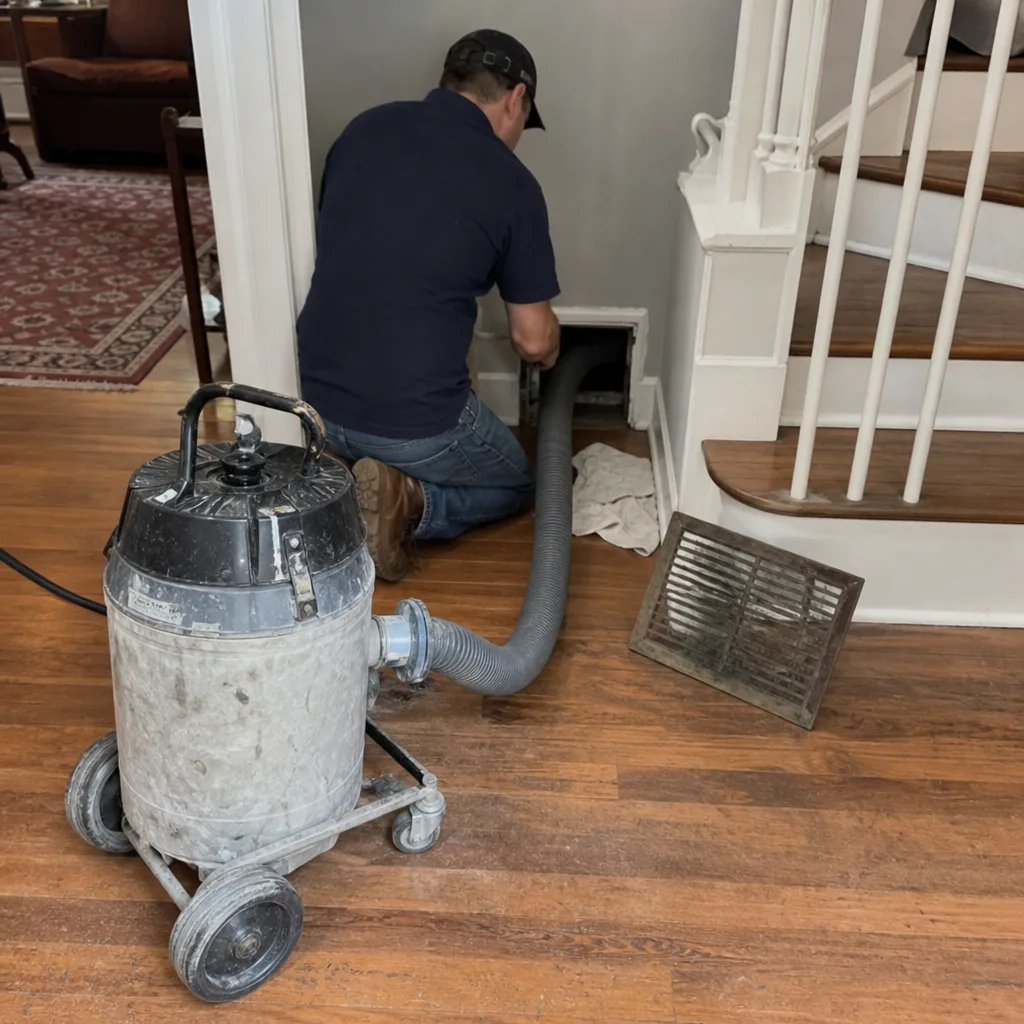 Before
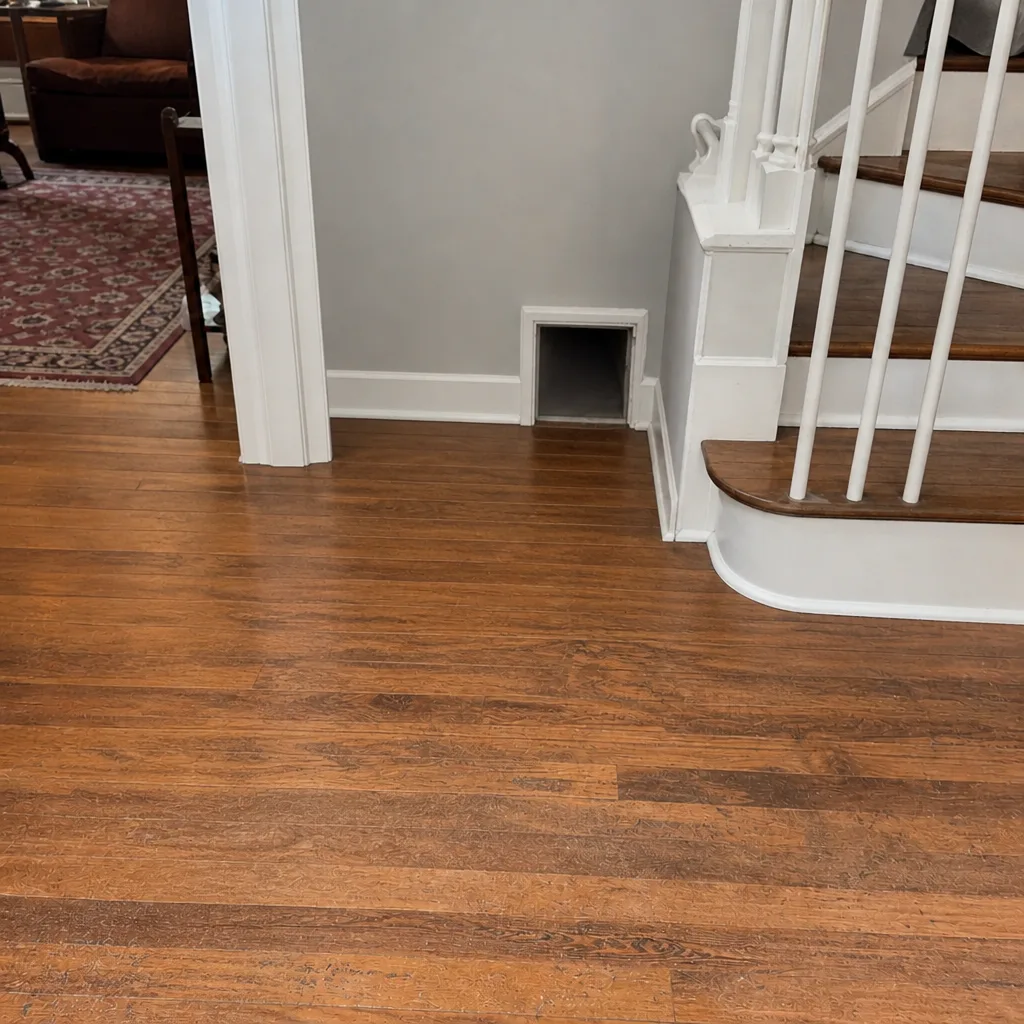 After
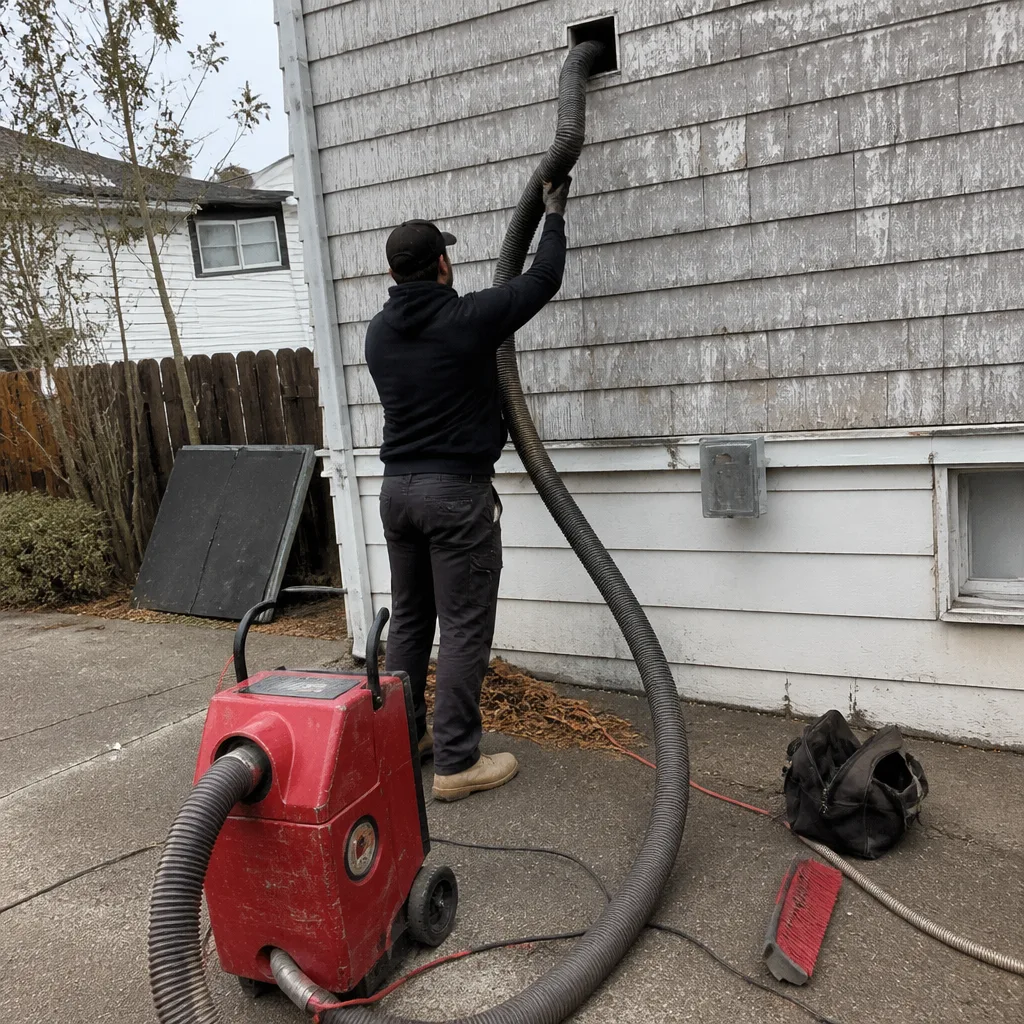 Before
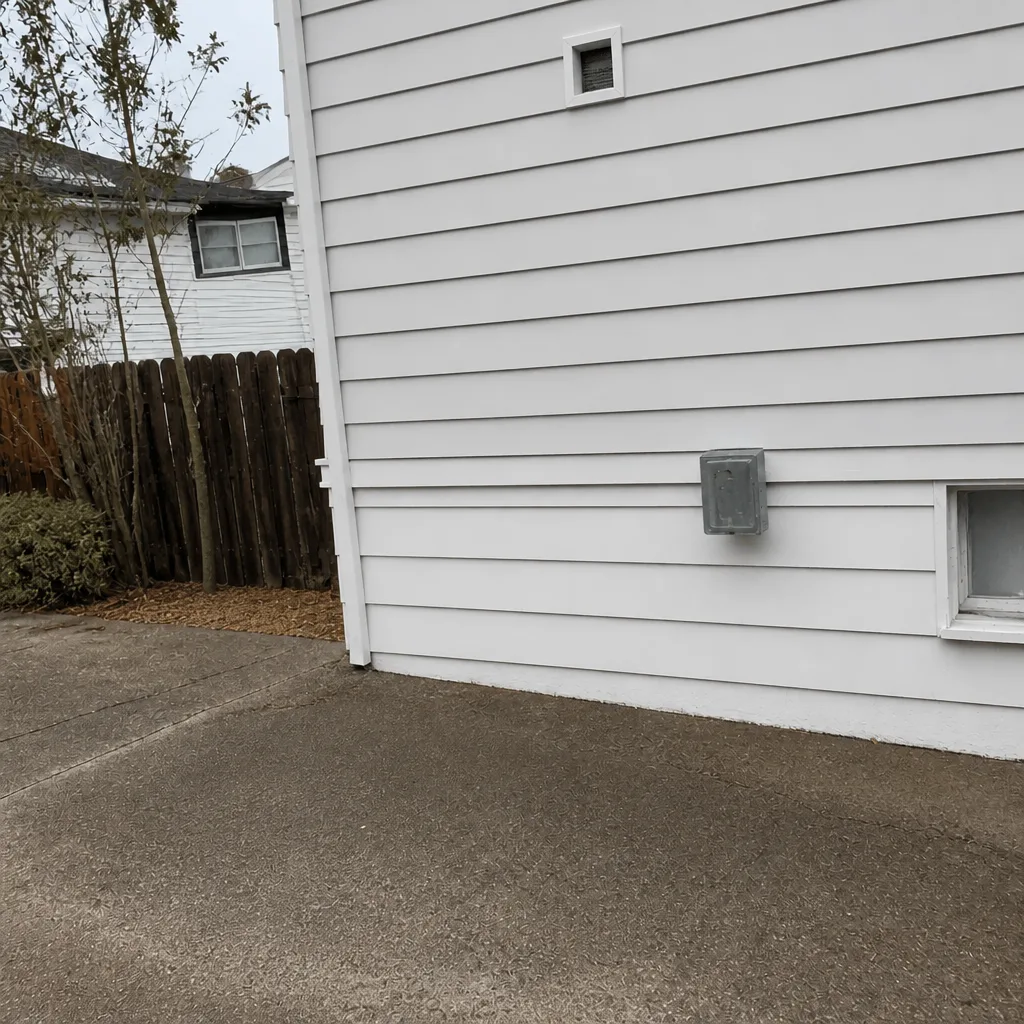 After
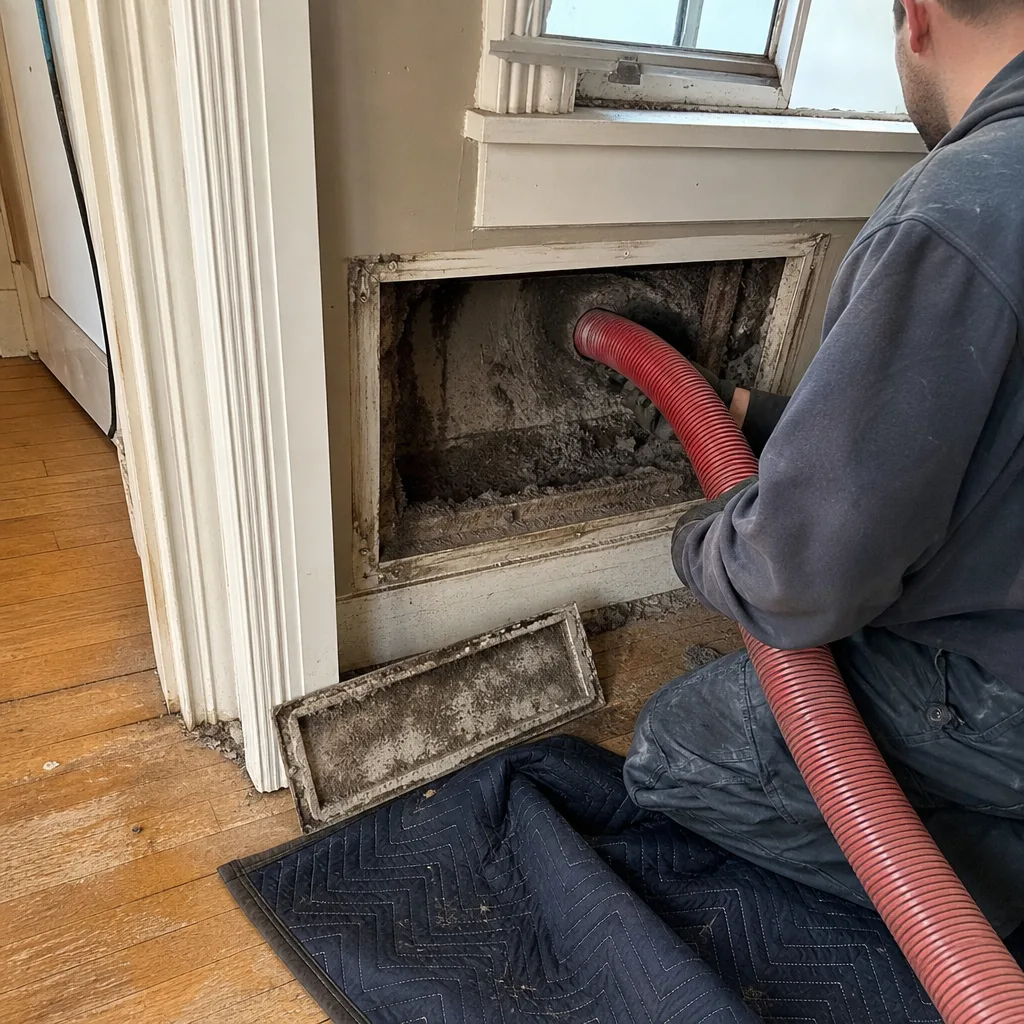 Before
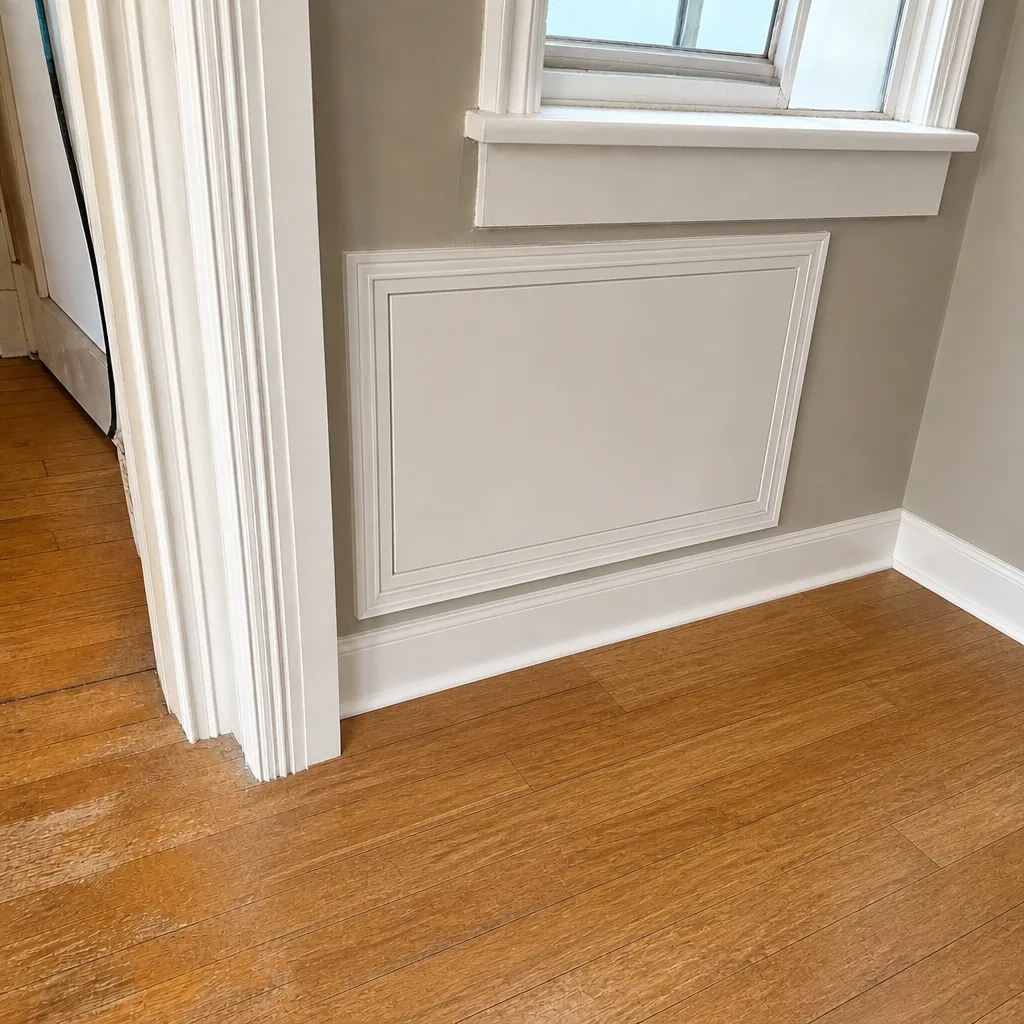 After
When to Call a Professional
Some symptoms are clear signals that it’s time to call. If you’re seeing visible dust blowing from registers shortly after cleaning them, that’s a sign the source problem hasn’t been addressed. If the house smells musty when the heat or AC comes on, the ducts may be harboring moisture and biological growth. If allergy symptoms worsen indoors and improve when you’re away, indoor air quality deserves a look. If the furnace or AC seems to run longer than it used to, a dusty air handler and leaky duct runs are often part of the problem. And if the dryer takes longer than it should, or the vent hasn’t been inspected, that’s a separate safety check worth scheduling.
Our technicians have up to 10 years of experience, and the estimate is free. Air Duct Cleaning Elmwood Village offers free estimates in Elmwood Village – call (855) 726-7901. We answer 24/7. Fast dispatch from 7am to 7pm, Sunday through Friday.
Frequently Asked Questions
Air duct cleaning in Elmwood Village is priced per system, not per vent, and the written estimate sets the final price. Cost depends on the number of systems, the condition of the ductwork, access, and whether repair, sealing, or sanitizing is included. Estimates are free, so the honest answer is to get one in writing rather than compare a coupon number. Call (855) 726-7901 for an exact quote – estimates are free.
Cheaper quotes usually cover a smaller scope: suction only, no mechanical agitation, no containment, no repair, no photos. The equipment and the steps are the price. When you compare quotes, compare the list of included steps, not the top-line number. Call (855) 726-7901 to talk through what our scope includes – estimates are free.
Ask for before-and-after photographs of your own ducts. Photos of the interior before the crew starts and after they finish are the closest thing to proof a homeowner can get. A company that includes them as standard practice is telling you something by doing so. Call (855) 726-7901 if you’d like to see what our process and photos look like – estimates are free.
Most homes benefit from duct cleaning every few years, though the real answer depends on the home and the system. Homes with pets, recent renovation, or visible dust circulation often need it sooner. Homes in older Elmwood Village buildings with retrofitted ductwork deserve a look at least once to establish a baseline. Call (855) 726-7901 for a free assessment – the estimate will tell you what’s actually needed.
It helps to be home for the walkthrough at the start and the inspection at the end. Cleaning takes most of a visit, and the technician will want to show you the setup and the results. The estimate process is the same: a walkthrough, then a written price before anything starts. Call (855) 726-7901 to schedule – estimates are free.
NADCA certification speaks to the industry standard for duct cleaning practice and inspection. A New York mechanical contractor license covers system repair and alteration work. For cleaning, NADCA is the relevant credential; for repair and sealing, ask about the license. A full-scope contractor can explain which applies to the work you need. Call (855) 726-7901 with questions – estimates are free.
The Bottom Line
Choosing an air duct cleaning company in Elmwood Village is an equipment and scope verification exercise, not a brand recognition one. The right company can name its vacuum and agitation tools, runs containment on every job, inspects before and after, and can handle cleaning, repair, sealing, and sanitizing under one call. The right price is a flat price per system, agreed in writing before work starts, with before-and-after photos as proof. Ask the five questions, check the reviews for detail rather than friendliness, and be wary of any quote that’s dramatically lower than the rest. Follow that process and the comparison becomes straightforward.
We use Rotobrush and Nikro systems, Abatement Technologies negative-air equipment, Guardsman-grade sanitizing, and Aprilaire and Honeywell air quality solutions, so you can expect every question above to have a specific answer. Call (855) 726-7901 for a free estimate. We answer 24/7. Fast dispatch from 7am to 7pm, Sunday through Friday.
Written by the team at Air Duct Cleaning Elmwood Village.